
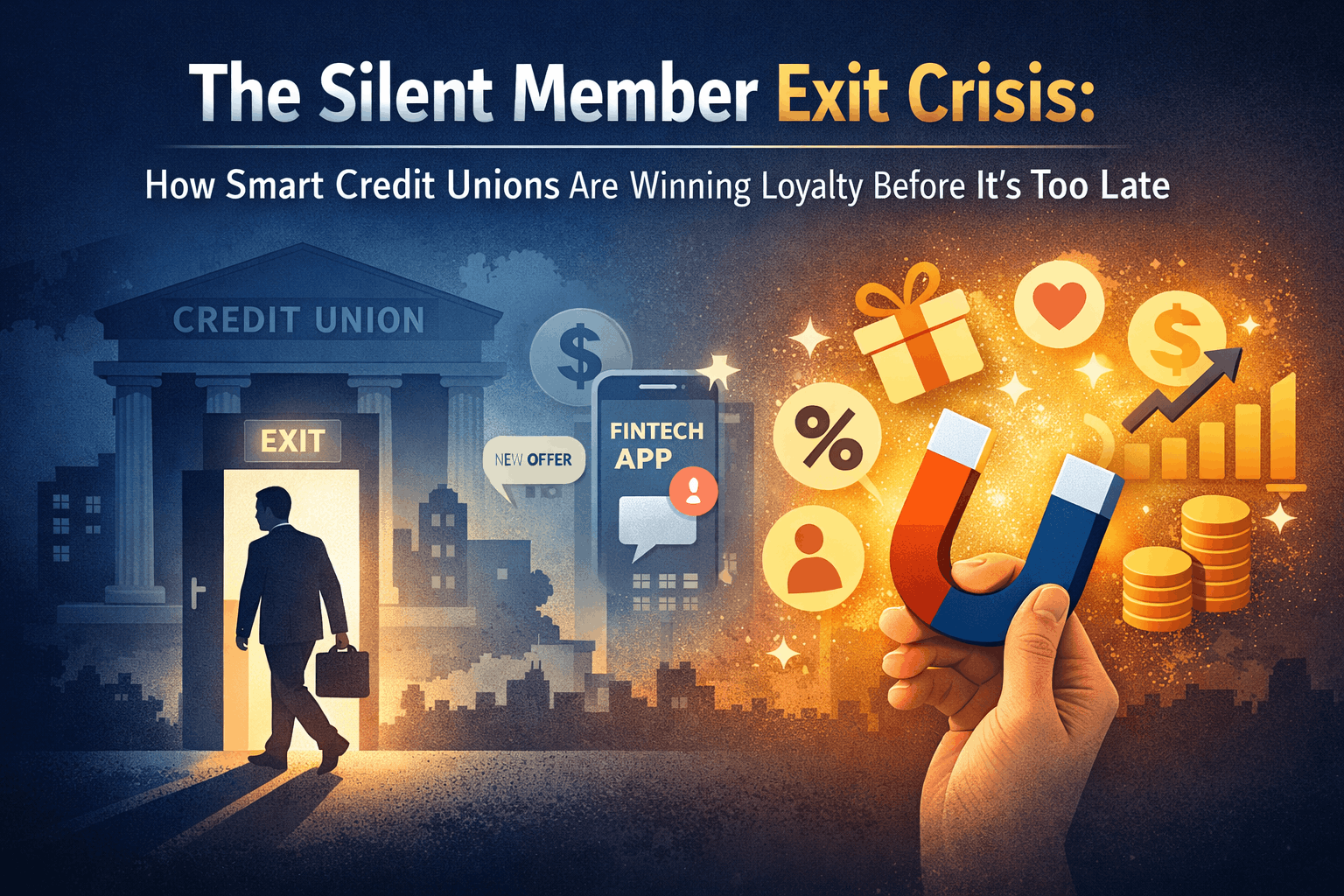
Let’s be honest. Most members don’t walk into a credit union one day and announce they’re leaving. They just slowly disengage. Fewer transactions. Lower balances. Eventually, the relationship fades. And in a competitive financial landscape where digital banks and fintech apps are one tap away, that silent exit is happening faster than ever.
That’s exactly why credit union loyalty programs are no longer a “nice-to-have” perk. They’ve become a strategic retention engine.
The Retention Problem No One Talks About
Here’s something worth paying attention to:
Studies consistently show that increasing customer retention by just 5% can increase profits by 25% to 95%, according to research by Bain & Company.
In financial services, the math is even more compelling. Acquiring a new member costs significantly more than keeping an existing one. Marketing, onboarding, compliance, servicing—it adds up quickly.
Now think about this: credit unions operate on a member-owned model. Retention isn’t just about revenue. It’s about preserving long-term relationships, trust, and community impact.
So the real question becomes — how do you make members stay, engage, and grow with you?
Loyalty Is Emotional Before It’s Financial
Many institutions still assume that competitive rates alone will secure loyalty. That might have worked 15 years ago. Today? Not so much.
Members expect:
- Personalized experiences
- Digital convenience
- Meaningful rewards
- Recognition for their engagement
A well-designed reward ecosystem taps into behavioral psychology. When members earn points for everyday actions—like using a debit card, setting up direct deposit, or referring a friend—it creates positive reinforcement. That simple recognition strengthens the emotional bond.
And that emotional bond is what keeps accounts active.
What Makes Loyalty Work for Credit Unions?
Not all programs drive results. The difference lies in strategy.
Here’s what actually increases retention:
1. Rewarding Everyday Banking Behavior
Successful organizations focus on rewarding small and regular actions rather than major monetary milestones. Examples of frequent usage include using your debit card, paying bills or logging into an application via a mobile device.
According to Financial Services Analysts, members of various financial services tend to be much less likely to leave their current financial institution when they have three or more products than if they are only using one product.
Essentially, the loyalty structure of many financial services organizations enables organic cross-use of all available products for an organization's members. Members are harder to leave the more products they have and the more integrated with the organization they become.
2. Data-Driven Personalization
Blanket campaigns don’t work anymore.
Modern platforms use behavioral data to tailor offers. For example:
- A young professional might receive savings-based challenges.
- A family might receive mortgage or insurance-related rewards.
- A business member might get incentives tied to transaction volume.
When members feel understood, engagement increases naturally.
3. Gamification That Feels Natural
This isn’t about flashy gimmicks. It’s about subtle engagement mechanics:
- Tier upgrades
- Milestone badges
- Surprise bonus points
These elements activate intrinsic motivation. And when designed correctly, they don’t feel forced. They feel rewarded.
Credit Unions vs. Traditional Banks: Why the Approach Must Be Different
A typical bank loyalty program often focuses heavily on transactional benefits—cashback percentages, travel points, and premium tiers.
Credit union loyalty programs operate differently. Their competitive advantage is community and trust.
That means the loyalty model should:
- Reinforce community values
- Encourage financial wellness
- Promote long-term relationships
- Reward participation, not just spending
For example, some programs reward members for attending financial literacy workshops or participating in community events. That deepens the connection in a way generic cashback never can.
The Digital Shift Is Accelerating Expectations
Here’s a critical insight:
According to industry reports, more than 70% of financial interactions now happen digitally.
If your loyalty experience is not seamlessly integrated into mobile banking, it simply won’t get used.
Members want to:
- Track rewards in real time
- Redeem benefits easily
- Receive instant recognition
If the process feels complicated, engagement drops. Retention today depends on frictionless design.
Measuring the Real Impact
When implemented strategically, loyalty programs influence key metrics such as:
- Increased product holding per member
- Higher transaction frequency
- Lower churn rates
- Improved lifetime value
And perhaps most importantly, they create a feedback loop. Engaged members provide more data. More data enables better personalization. Better personalization increases satisfaction.
It’s a growth cycle, not a marketing campaign.
Why Timing Matters Now
The financial ecosystem is evolving rapidly. Fintech startups offer slick apps. Neobanks promise zero fees. Large institutions invest heavily in digital experiences.
Credit unions cannot compete purely on scale. But they can win on relationships.
And structured loyalty gives them a measurable way to strengthen those relationships.
Waiting too long to implement a modern engagement strategy means allowing members to gradually disengage without intervention.
The Bottom Line
Retention doesn’t happen by accident. It happens by design.
Credit unions that invest in structured engagement frameworks see:
- Higher emotional connection
- Stronger product adoption
- Greater lifetime member value
- Sustainable growth
The future of member retention will not be built on rates alone. It will be built on recognition, personalization, and meaningful engagement.
If you want to explore how loyalty-driven retention strategies can transform member engagement, Novus Loyalty is one of the best platforms.